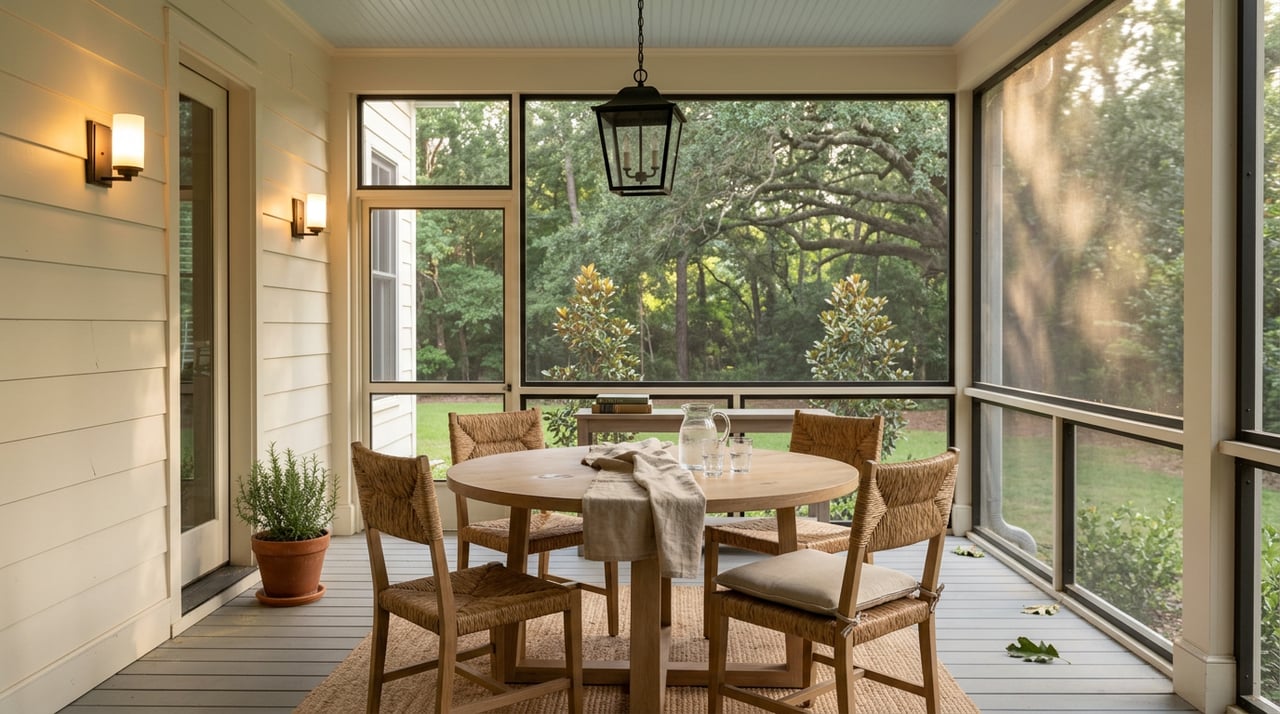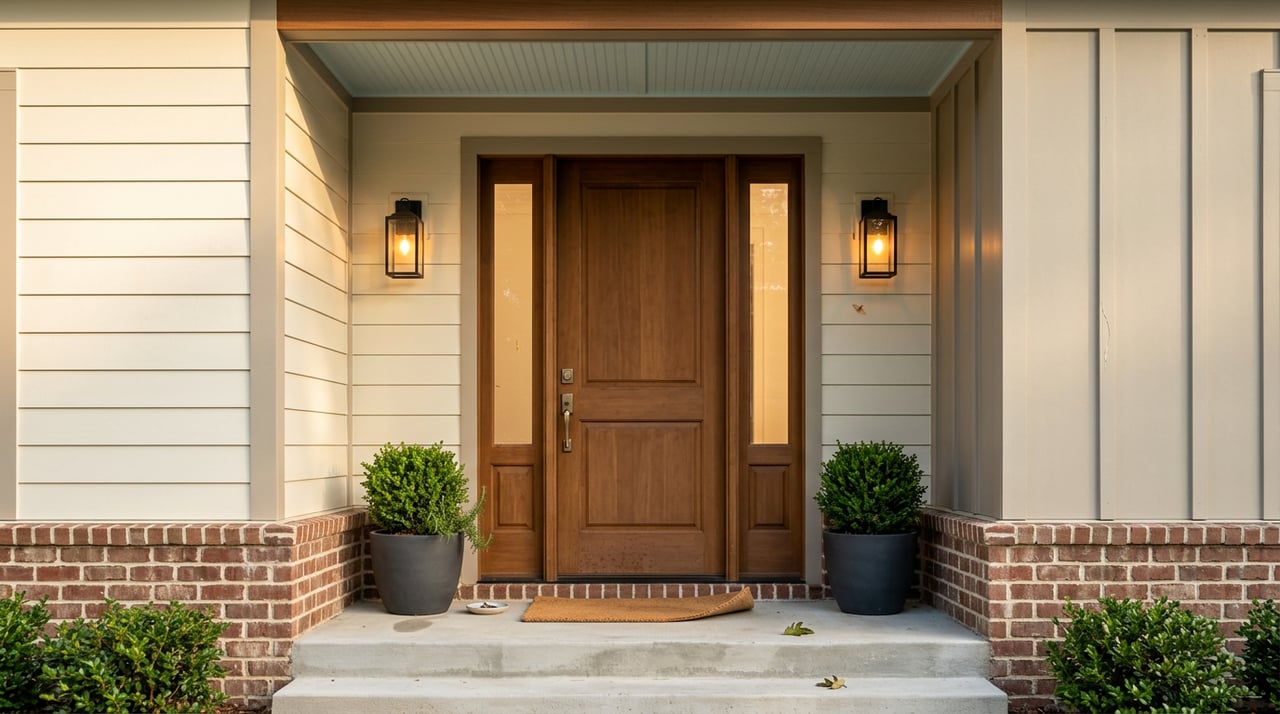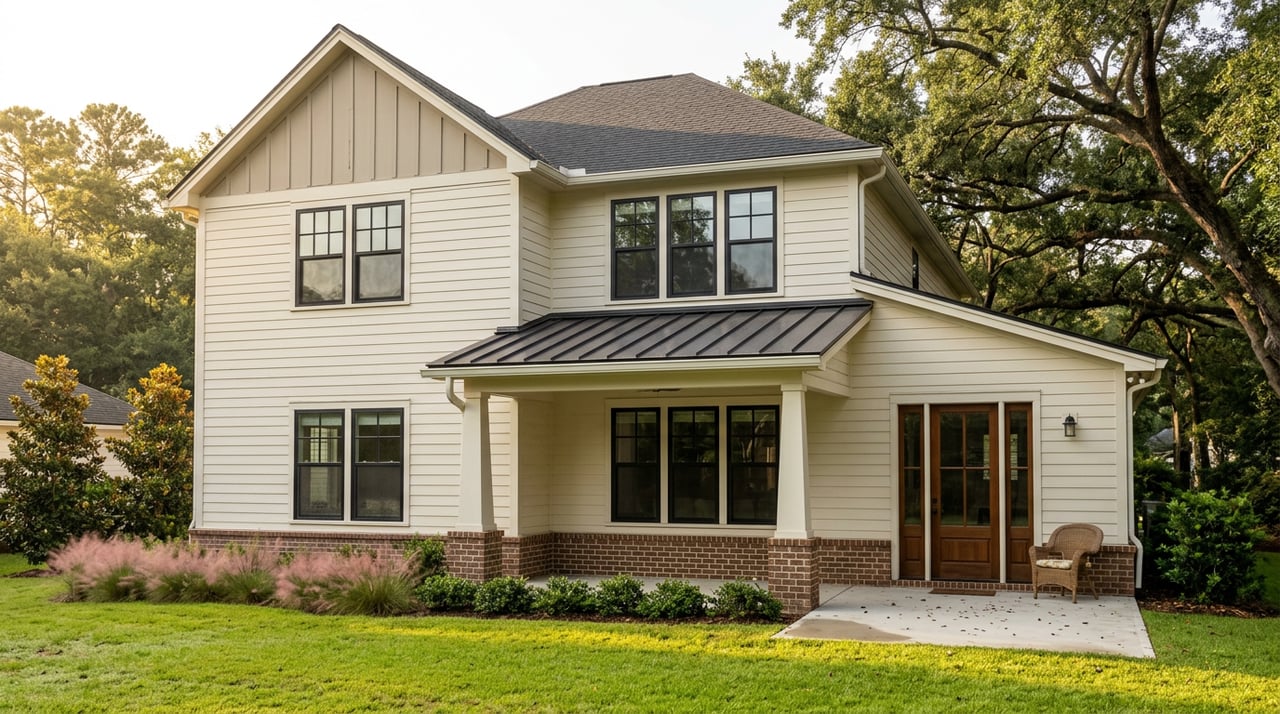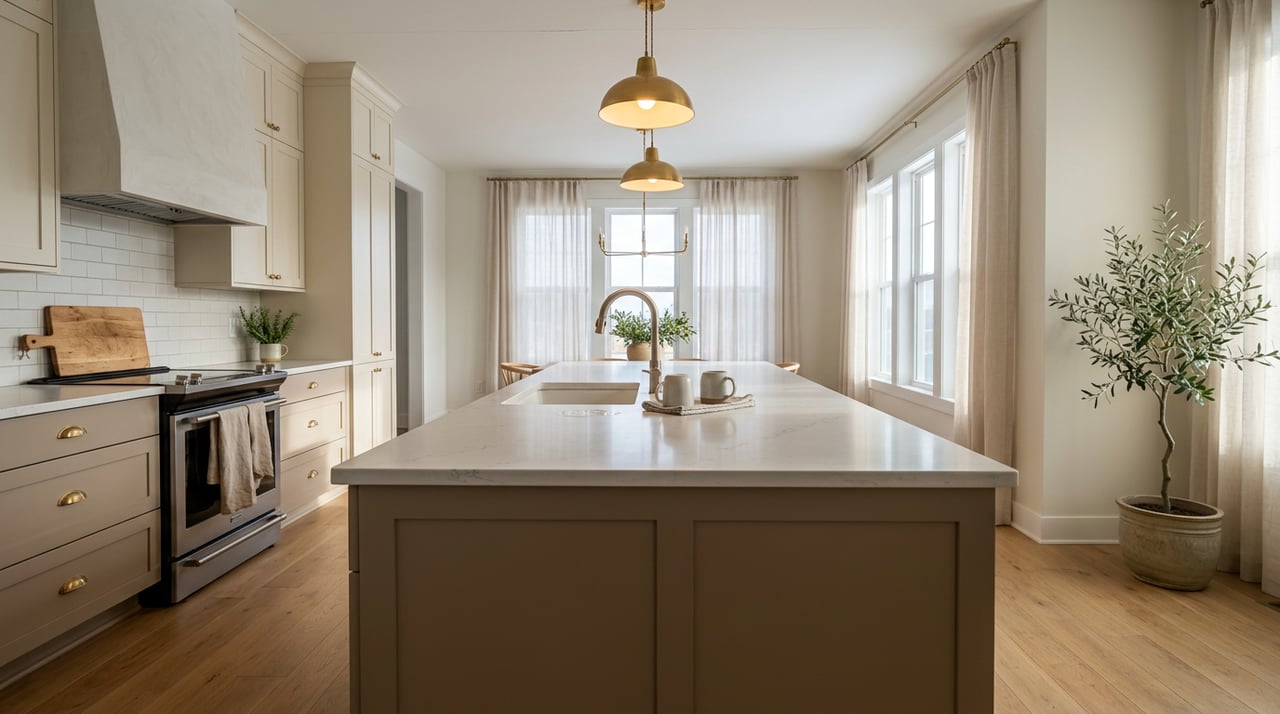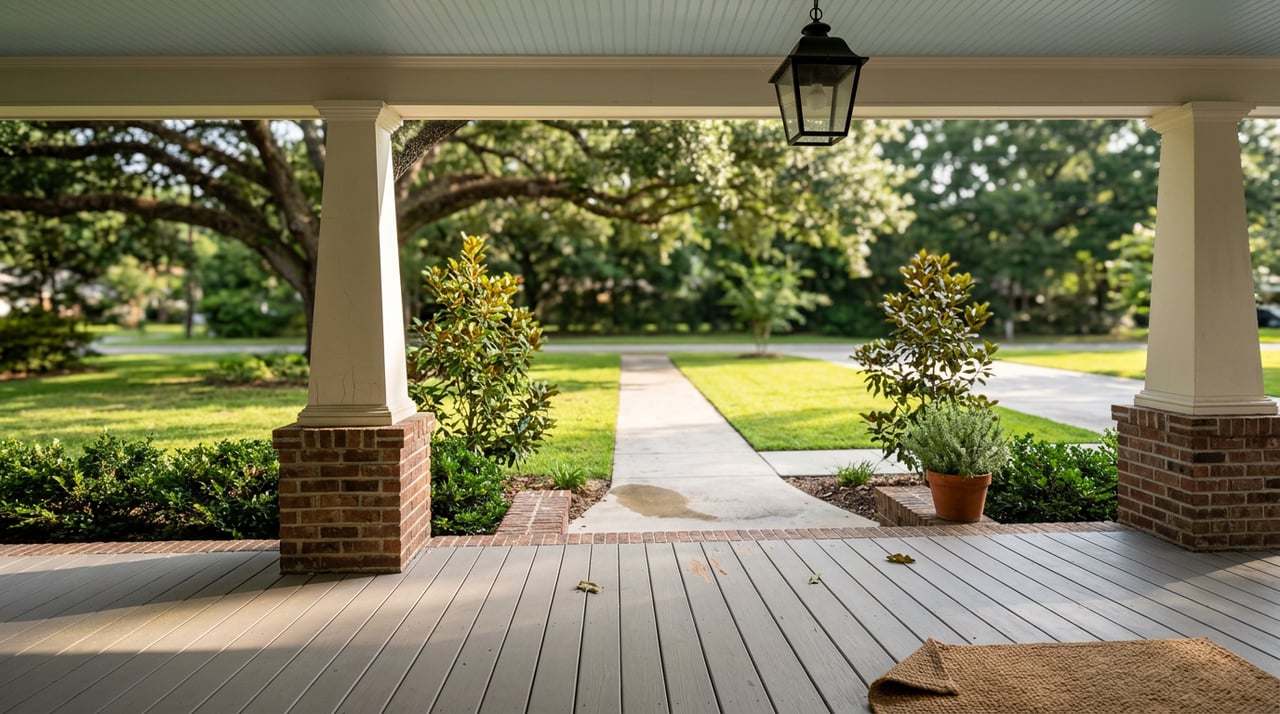
Two 2,000-square-foot homes list at $375,000 on the same weekend in Orleans Parish. One is a 1958 raised bungalow in Gentilly that has been re-roofed and rewired. The other is a 2025 build on the same block, elevated, hardie-clad, with a Fortify-designated roof and impact-rated windows. On paper they look like a wash. Once the insurance quotes come back, they aren't. In New Orleans in 2026, the line item that decides which house you can actually afford to own is not the price. It's the premium.
That's the argument of this post, and every number below is here to support it.
Two forecasts, one metro
The 2026 headlines about New Orleans don't cohere until you stop reading them as a single market. Realtor.com's 2026 forecast, released in December 2025, projects metro home sales down 4.4% and prices up 5.8% for the year, more than double the projected national rate of 2.2%. Compare that to the same forecast's projection for Baton Rouge: 7.1% sales growth with 2.2% price appreciation.
Redfin's rolling three-month window through May 2026 shows a $354,000 median, up 5.7% year over year, with homes selling in about 75 days on 1,072 May closings. Zillow's home value index, updated May 31, 2026, sits at $246,374, down 2.3% year over year, with homes going pending in roughly 37 days. NOMAR reported more than 10,800 closed sales in the New Orleans metro area in 2025, almost 2% better than the previous year.
None of these disagree. They're measuring different things. Redfin tracks sold prices in a small, well-located slice of the metro. Zillow's ZHVI is an all-homes valuation that includes the older, aging-in-place stock. What both readings share is a story of thin resale supply meeting steady demand, with the price line refusing to give even as the sales line falls. That's the classic lock-in signature. Realtor.com described it plainly: many local homeowners remain reluctant to list, a dynamic that mirrors the national "lock-in effect" limiting mobility for owners who secured sub-6% mortgage rates during the pandemic.
"I think now we've gotten into a more normative market. The inventory is a more normative situation." — Rick Roberts, NOMAR president-elect, speaking about the local market heading into 2026
Normative for New Orleans in 2026 means resale sellers who can hold, and buyers who have to solve for cost some other way.
The number that reorders everything
Here is where the second forecast, the one nobody puts on a housing chart, walks in.
Louisiana homeowners insurance is priced off hurricane exposure, litigation costs, and reinsurance, and Orleans Parish sits at the sharp end of all three. The average cost of homeowners insurance in New Orleans is $4,480 per year, while Baton Rouge homeowners pay $2,710 per year, according to NerdWallet's March 2026 analysis. Insurify's February 2026 sample runs higher, at $6,739 for a $300,000 policy with a $500 deductible. Valuepenguin puts New Orleans home insurance at an average of $4,037 per year, which is 59% more expensive than the Louisiana average.
The reason those three sources produce three different numbers is the same reason the market feels wobbly to buyers: the carrier market itself is unstable. Several major insurers have reduced Louisiana coverage or exited the market entirely in recent years. Louisiana Illuminator reports that the state's residual market (Louisiana Citizens Property Insurance) grew from roughly 34,000 policies in 2020 to over 125,000 by 2024. When a state-of-last-resort insurer quadruples in five years, private carrier pricing is the friction, not the noise.
For a buyer, that has two implications. First, the spread between the cheapest available quote and the most expensive one is enormous. MoneyGeek's June 2026 Louisiana analysis found Foremost Insurance averaging $164 per month while Louisiana Farm Bureau averages $1,638 per month, a $17,688 annual spread for the same baseline coverage. Shopping a policy across three carriers is not diligence. It's the deal.
Second, and this is where new construction stops being a lifestyle preference and starts being a math preference, the home itself changes the quote.
What Fortify and wind mitigation actually do to the math
A standard Louisiana homeowners policy carries a named-storm deductible and a wind or hail deductible that's separate from the all-other-perils deductible. Carriers underwrite the wind risk against the physical building. The building either resists Category 3 wind loads or it doesn't. New construction in Orleans Parish has been built to post-Katrina code for nearly two decades, and current builders in the metro layer additional mitigation on top of that baseline.
Chabert Insurance of Baton Rouge, writing for a June 2026 audience, put a hard number on it: A Fortify-certified roof can also qualify for wind premium reductions of 20% to 52%. That's not a marketing figure. It's a carrier-side discount tied to the IBHS Fortified designation, which requires sealed roof deck, ring-shank nails, and a rated roof cover. New builds routinely spec to it. A 1960s bungalow doesn't, and retrofitting is expensive.
The rest of the wind-mitigation credit stack that new construction buyers should be asking about:
- Impact-rated windows or permanent storm shutters
- Hip roof geometry with rated tie-downs
- Wind-rated garage doors
- Continuous load path from foundation to roof deck
- Elevation certificate for flood zone premium reduction
On a $350,000 dwelling policy in Orleans Parish where the base quote lands near $5,000, stacking those credits can pull the annual premium below $3,000. That's a $2,000-a-year swing, or roughly $167 a month. Applied to a 30-year loan at current rates, that monthly delta is equivalent to about $28,000 of purchase price. The new-construction "premium" over comparable resale often shrinks or disappears once you underwrite the home the way the insurance carrier does.
None of this even touches flood insurance, which sits in a separate NFIP or private-flood conversation and is priced off elevation, base flood elevation, and machinery placement. Newer builds have machinery elevated by design. Older builds often don't.
Where the new construction actually is
New Orleans new construction breaks into three product categories, and each solves a different problem.
Infill inside the parish. Gentilly, Lakeview, Algiers, Bywater, and pockets of the 7th Ward have absorbed the largest share of scattered-site builds. Builders active in that segment include Alvarez Construction, Reve Inc., Sunrise Homes, Welbilt Custom Homes, and Sieverding Construction. Zillow's July 2026 new-construction search in Orleans Parish shows product ranging from a $275,000 three-bedroom on S. Saratoga to a $1.35 million four-bedroom on Cadiz.
Master-planned communities on the metro edge. English Turn in Orleans Parish and Parks of Plaquemines just downriver have absorbed larger tract product. The 2026 Parade homes range from $255,000 to more than $2 million and are located in River Ridge, Parks of Plaquemines, Crestmont Park, Bonnabel Place and Cottam Park in Metairie; Live Oak Manor in Westwego; Garden Park in Gretna; Water Oaks in Waggaman; and English Turn and Audubon Park in New Orleans.
The Northshore alternative. For buyers priced out of intra-parish new construction or unwilling to underwrite hurricane exposure at Orleans Parish rates, St. Tammany Parish new construction in Covington, Mandeville, and Madisonville has continued to draw demand.
The Home Builders Association of Greater New Orleans ran its 2026 Parade of Homes on consecutive weekends starting June 20-21 and 27-28, with tours available from 1–5 p.m. each day. If you missed the in-person tour, select homes will also be available for virtual viewing using Matterport 3D virtual tour technology through the New Orleans Parade of Homes mobile app and on the HBAGNO website. It remains the most efficient way to walk product across builders in one sweep.
Questions to bring to a builder site in 2026
The buyer who wins in this market is the one asking the right questions before contract, not after.
- What Fortified designation does this roof carry, and can you provide the IBHS certificate at closing?
- Are the windows impact-rated, and to what design pressure?
- What is the finished floor elevation relative to base flood elevation, and will an elevation certificate be issued?
- Which preferred lender rate buydown is currently offered, and does it stack with closing cost credits?
- If I bring my own insurance agent for a quote, will the builder share the wind-mitigation inspection with them pre-closing?
- What is the builder's warranty structure on the roof envelope specifically?
- Is the HVAC condenser elevated above BFE?
Answers to those seven questions move a buyer's total cost of ownership more than lot premium, upgrade allowance, and interest rate combined.
FAQ
Is now a bad time to buy in New Orleans? The metro's projected 5.8% price appreciation for 2026 is a supply story, not a demand story. If you're waiting for prices to fall, the forecast doesn't support the wait. If you're waiting for insurance to normalize, the residual market growth from 34,000 to 125,000 policies over four years doesn't support that wait either.
Does new construction really insure that much cheaper than resale? It depends on the resale. A 2015 build with a current roof and impact windows can quote close to a new build. A 1950s home with original framing and a five-year-old asphalt roof will quote materially higher, and some carriers won't write it at all.
What about flood insurance? Flood is priced separately through the NFIP or a private-flood carrier and depends on flood zone, elevation certificate, and machinery location. New construction is generally designed to modern elevation standards and quotes accordingly. Ask for the elevation certificate before you write an offer.
Is the Northshore actually cheaper once you add the commute? Sometimes. The insurance delta between Orleans Parish and St. Tammany is real, and for a buyer whose office is in Metairie or on the Northshore itself, the total-cost math often favors crossing the lake. For a buyer commuting daily into the CBD, the toll and time cost narrows the gap.
If you're comparing a resale in Lakeview to a new build in Parks of Plaquemines, or trying to decide whether the Northshore math actually pencils for your household, the answer lives inside the insurance quote, the builder's mitigation package, and the incentive stack, not the MLS price. That's the work I do with buyers. Build With Alanna represents the buyer, reads the contract, and runs the total-cost math before you sign. Let's Connect.