What if the biggest swing in your Prairieville closing costs has nothing to do with the house at all?
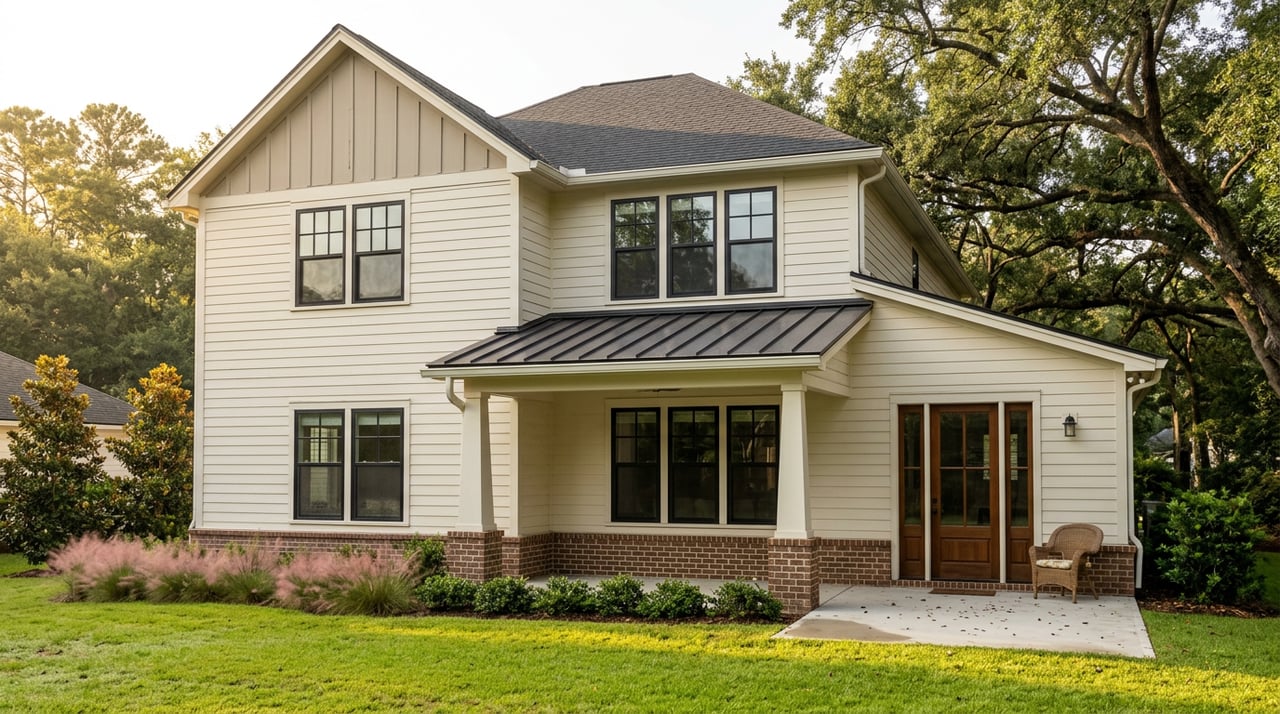
Walk two buyers through Ascension Parish this month. Both want a four-bedroom new build under 2,500 square feet. Both land on comparable floor plans in comparable subdivisions. Both assume the number on the builder's price sheet is close to the number they'll actually owe at the table. Then the settlement statements arrive, and they're not the same. Not because one buyer negotiated better upgrades. Because the parish, the tax district, and the HOA each ran their own math in the background, and none of that math shows up on a floor plan brochure.
That gap is the actual story for anyone buying new construction in Prairieville right now. Here's where it comes from.
The Fee That Resets Every July 1
Every new home built in Ascension Parish carries a Transportation Impact Fee, a charge the Parish Council adopted in 2016 specifically to make new development help fund the roads it puts more cars onto. It is not a one-time flat number set in stone. Under the ordinance, the fee schedule gets recalculated on the first day of every July, tied to the percentage change in the Engineering News Record Construction Cost Index for the New Orleans area over the prior two years. That means the fee a buyer owes depends partly on when a building permit was pulled, not just on the home itself.
That volatility is real. When the council took up the fiscal year 2024-25 adjustment, Planning Director Eric Poche told the Transportation Committee that the prior cycle's index swing had brought "a pretty good bump of about 15%," while that year's own recalculation pulled back and staff recommended a 3.17% reduction instead. Same ordinance, same formula, two very different outcomes one cycle apart. The parish's own planning department confirms the schedule was revised again this past July, meaning a home permitted this summer is being priced under a different fee structure than one permitted a year ago, even if the two houses are otherwise identical.
There's also a geographic split baked into the fee. Ascension Parish collects the Transportation Impact Fee at its full published rate on the East Bank of the Mississippi River, where Prairieville sits, while the West Bank around Donaldsonville has been collecting at only 35% of the maximum since the fee began. Parish leadership has been open about why. As Terri Casso put it when the council first passed the measure:
"If we have to have a carrot and a stick, then so be it."
The carrot goes to the side of the parish losing population. The stick lands on Prairieville, which is exactly why District 3, the council district that covers Prairieville, had generated roughly two-thirds of the more than $15 million this fee collected across the parish's three districts as of its most recently reported tally. If you're building here, you are funding here. That funding is earmarked for a specific list of projects Move Ascension tracks, including a planned roundabout at LA 73 and Bluff Road, a safety widening on C Braud Road between LA 73 and Bluff Road, and a roundabout planned for Parker Road and PR 929, all routes that run directly past Prairieville subdivisions like Hollows of Dutchtown and Shadows of Ascension.
Same Zip Code, Different Tax Bill
The impact fee is a closing-day number. Millage is the number that follows you every year after. Ascension Parish's average total millage rate runs around 115.00, but the actual rate applied to any given lot depends on which taxing bodies overlap that specific piece of ground, and those overlaps change block by block.
Southern Title's parish breakdown shows what that looks like in practice for two nearby but legally distinct locations:
| Taxing Body | Unincorporated Prairieville (Fire District) | Inside Gonzales City Limits |
|---|---|---|
| Parish taxes | 29.78 | 28.42 (reduced parish rate) |
| School taxes | 61.59 | 61.59 |
| Ponchartrain Levee | 3.53 | 3.53 |
| East Ascension Drainage | 4.88 | 4.88 |
| Fire or city tax | Prairieville Fire: 9.62 | Gonzales city taxes: 8.55 |
| Juvenile Detention | 0.98 | 0.98 |
| Total | 111.36 mills | Close, but not identical |
Two homes ten minutes apart can be taxed under genuinely different formulas depending on whether the lot sits inside city limits or under a fire protection district instead. Ascension Parish also runs four separate tax districts overall, and the parish assessor's office is the only reliable way to confirm which one applies to a specific address before you sign anything.
Sixteen Roads, Sixteen Assessments
Millage isn't the only location-based charge layered onto a Prairieville property tax bill. Ascension Parish maintains sixteen separate Subdivision Road Districts, special assessments that fund road maintenance within a defined subdivision boundary and that vary by location within the parish. These aren't disclosed on a builder's incentive sheet. They surface on the tax bill, and confirming which of the sixteen districts covers a particular lot means a direct call to the assessor's office, not a guess based on the subdivision's marketing name.
For a buyer comparing two Prairieville communities that look nearly identical on paper, this is one more variable worth pricing in before falling in love with a floor plan.
What Gated Communities Add on Top
Prairieville's most active new-construction subdivisions, places like Hollows of Dutchtown off LA Highway 73 with its three lakes and community pool, Shadows of Ascension off Parker Road, Dutchtown Meadows, and Manchac Reserve, are all HOA-governed. That means a mandatory association fee structure stacks on top of everything above.
Two charges typically show up at closing in an HOA community. A transfer fee, a one-time administrative charge that funds the association's paperwork and record updates, commonly running somewhere between a few hundred dollars and around $1,400 depending on the community. And a capital contribution, a separate and larger buy-in, often calculated as two to three months of regular dues, that goes straight into the association's reserve fund rather than to administrative costs. Unlike the transfer fee, the capital contribution isn't refunded and isn't waived just because a previous owner already paid one. Most associations re-charge it at every transfer of ownership.
Neither of these appears on a builder's base price. Both are standard in gated new-construction communities, and both are worth asking a builder's sales office to disclose in writing before a contract is signed.
The Recheck Fee Spec Buyers Don't See
One more line item is specific to new construction and rarely to resale. If a lender's appraisal happens while a home is still under construction, the lender typically requires a follow-up completion inspection once the house is finished, confirming everything on the plans actually got built. That recheck usually adds somewhere in the range of $175 to $200 on top of the standard appraisal fee. Buyers purchasing a fully completed spec home rarely encounter this cost. Buyers who go under contract early on a to-be-built home almost always do.
Before You Sign: Questions to Ask
- What building permit date is this home's Transportation Impact Fee based on, and was it collected under the East Bank's full rate?
- Which of Ascension Parish's four tax districts and sixteen Subdivision Road Districts does this specific lot fall under?
- What is the HOA transfer fee versus the capital contribution, and is either negotiable with the seller or builder?
- Is this a spec home or a to-be-built home, and if it's the latter, has the lender confirmed whether a completion appraisal recheck will apply?
FAQ
Does the Transportation Impact Fee apply to spec homes already built, or only new permits? The fee is tied to the building permit and is typically collected from the builder or developer at permit issuance, then folded into the home's price. Two similarly priced spec homes permitted in different fiscal years can carry different embedded costs even before either buyer sees a contract.
Is the Subdivision Road District assessment a separate bill from my property taxes? No. It shows up as an additional millage inside the annual tax bill rather than as its own invoice, which is why confirming the specific district with the Ascension Parish Assessor's office before closing matters more than checking a subdivision's marketing materials.
Do HOA capital contributions get refunded when I eventually sell? No. It's a one-time, non-refundable payment into the association's reserves, separate from monthly or annual dues, and most associations charge it again to whoever buys the home next, regardless of what the previous owner already paid.
Every one of these line items is legal, disclosed somewhere in public record, and almost never explained clearly before a buyer is emotionally committed to a lot. That's the actual value of having someone in your corner who reads parish ordinances and tax district maps the way a builder's sales office reads a spec sheet. If you're comparing Prairieville communities and want the real total, not just the base price, Alanna Moss can walk through the specific fee, district, and HOA structure attached to any lot you're considering. Let's connect.